




INTRODUCTION
Maintaining the productivity and carrying capacity of natural pastures in southern Brazil is directly linked to the efficient control of broadleaf weeds. Species with complex morphological structures and distinct growth habits compete fiercely with native forage for space, light, and nutrients. To protect the diverse botanical composition and preserve the beneficial native broadleaf species of this ecosystem—including the native pasture species alongside white clover (Trifolium repens L.) and perennial ryegrass (Lolium perenne) ‘Santa Mathilde’, which were introduced in 2024 and remain well-established—the herbicide application was strictly directed and restricted only to the target invasive plants. This targeted management approach emerges as a viable strategic alternative, allowing for effective field clearing without compromising the integrity and biodiversity of the native pasture [1, 2, 3, 4].
CONTEXT
This report documents a real phytosanitary management action carried out on a private property located in Pai Bitu, in the municipality of São Francisco de Paula, RS, within the Campos de Cima da Serra ecosystem. It records the unsuccessful attempt to weed with a hoe. The application was conducted during the critical transition period between the end of autumn and the beginning of winter 2026, under climatic conditions of low temperatures (minimums: -0.4 and 2.5°C; maximums: 10 and 14°C) and overcast skies [1].
The treatment focused on the localized control of five difficult-to-manage invasive species: caraguatá (Bromelia antiacantha), carqueja (Baccharis trimera), black thistle (Cirsium vulgare), ragweed (Senecio brasiliensis), and dwarf watermelon (Solanum sisymbriifolium). The operation was carried out using a backpack sprayer, employing a solution composed of the commercial herbicide Tordon at a ratio of 100 ml per 10 liters of water (1% solution), plus 50 ml of mineral oil (0.5%) as an essential adjuvant to break through the leaf and hair barriers of the target plants. The spraying was precisely directed and restricted only to the invasive plants, avoiding any application to the pasture. This ensured the protection of the native pasture, in addition to the white clover (Trifolium repens L.) and perennial ryegrass (Lolium perenne) ‘Santa Mathilde’ introduced in 2024, which remain.
OBJECTIVE
The objective of this publication is to document and analyze, chronologically, the visual gradient of effect and the biological efficiency of the targeted herbicide application on the five invasive species mentioned, evaluating the manifestation of initial symptoms six days after application (6 DAA). Furthermore, it seeks to demonstrate the practical results of this targeted management in preserving the natural pasture ecosystem and to provide a basis for agronomic decision-making regarding subsequent field touch-ups on the property.
Field Dynamics:
Evaluation of the Gradient at 6 DAA: Auxin-mimicking herbicides act directly on the vascular system and cell growth of broadleaf plants. However, under winter conditions in the Campos de Cima Serra region, the slowed plant metabolism dictates a different response rate for each invasive species under the same spray dosage (Tordon at 1% + Mineral Oil at 0.5%).
1. Overview of the Treated Area
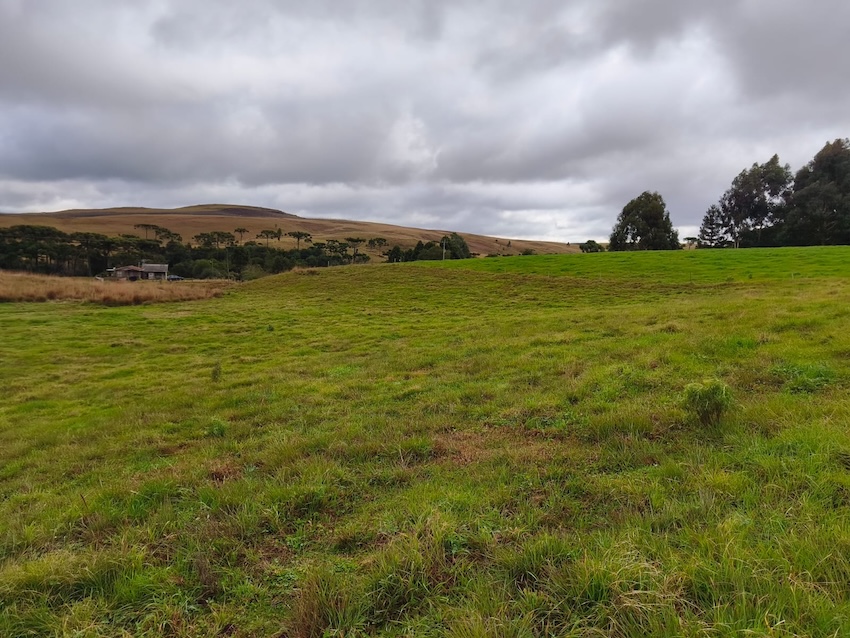
The first indicator of successful management is the practical selectivity observed in the native pasture. The natural grassland remains green and in full development, completely free from injuries or phytotoxicity caused by drift, which confirms the precision of the targeted application.
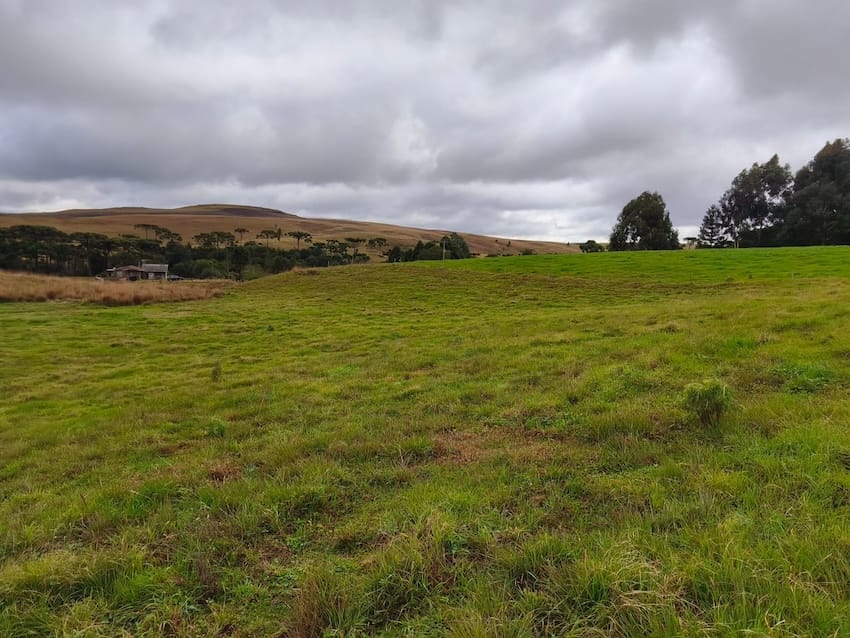
The panoramic view contextualizes the real-world scenario of weed management on a private property located in Pai Bitu, São Francisco de Paula, RS. Under weather conditions typical of late autumn and early winter, the natural pasture demonstrates the practical selectivity of the chemical treatment. While the target species begin to express the first symptoms of the hormonal herbicide’s gradient of effect, the native forage remains green and preserved, showing no signs of phytotoxicity. This protection of the native pasture validates the efficiency of targeted control using a backpack sprayer (Photo: 06/23/2026 | Application: 06/17/2026 | Pai Bitu, São Francisco de Paula, RS).
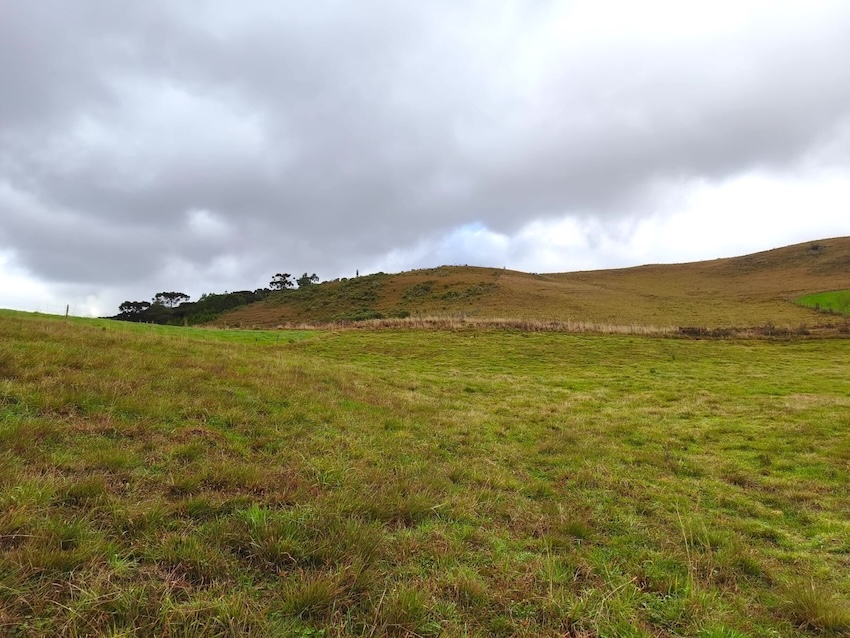
A photographic record from another angle reinforces the scenario of targeted management and the selectivity of the application on private property in Pai Bitu, in São Francisco de Paula, RS. The image highlights the typical undulations of the region’s terrain during this transition from autumn to winter, highlighting the contrast between the managed native grassland areas and the slopes in the background. The natural base pasture remains intact and free from injuries caused by drift, proving the precision of the work with the backpack sprayer even in areas of varied terrain (Photo: 06/23/2026 | Application: 06/17/2026 | Pai Bitu, São Francisco de Paula, RS).
2. Quick Response:
Sticky nightshade (Solanum sisymbriifolium). Due to its predominantly herbaceous tissues, the lsticky nightshade plant (or wild joá) manifested the effects of the hormonal herbicide in an accelerated and aggressive manner.
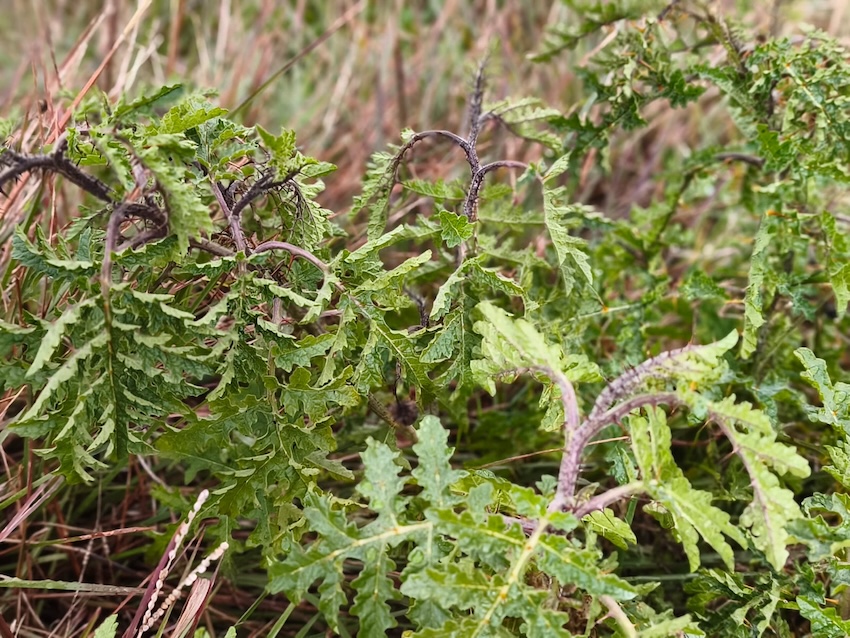
The image clearly shows the beginning of the visual gradient caused by the hormonal herbicide (Tordon + mineral oil). Severe epinasty is visible in the plant, characterized by pronounced twisting of the upper stems, downward curvature of the petioles, and initial loss of turgor in the leaves. Affected branches begin to show a purplish hue, signaling cell collapse and interruption of sap flow (Photo: 06/23/2026 | Application: 06/17/2026) | Pai Bitu, São Francisco de Paula, RS).
3. The Developmental Stage Factor: Black Thistle (Cirsium vulgare)
Monitoring of black thistle yielded the richest technical contrast of this monitoring, empirically proving how the age of the plant interferes with product translocation:
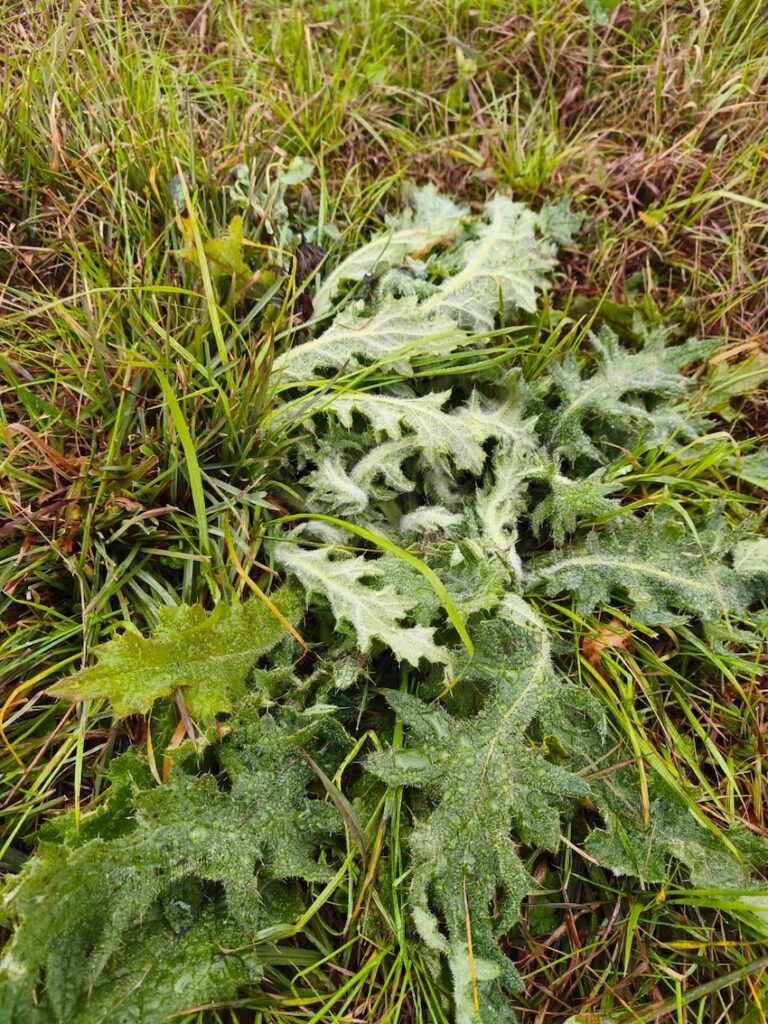
The technical record shows the first symptoms of the hormonal herbicide’s effect gradient on the purple thistle rosette. Epinasty begins, characterized by the twisting and arching of the spiny leaves, which start to lose turgor and become misaligned from the soil. The breakdown of the hair barrier by the mineral oil ensured initial absorption of the product even under the cold winter conditions in the Campos de Cima da Serra region (Photo: 06/23/2026 | Application: 06/17/2026) | Pai Bitu, São Francisco de Paula, RS).
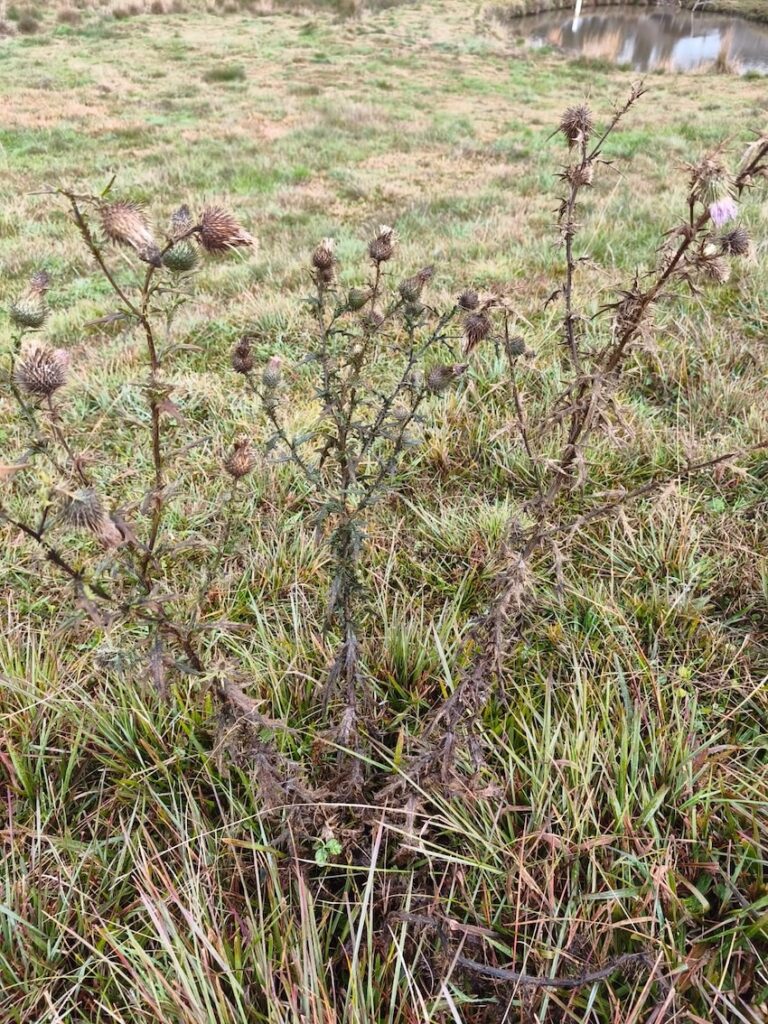
The technical photographic record demonstrates the initial response of an adult thistle plant in its reproductive stage (presence of flower heads and dry seeds) to treatment with the hormonal herbicide and mineral oil. Unlike the young rosette, the lignified adult specimen shows the visual gradient more slowly, concentrated in the discreet wilting of the lower leaves, darkening of the stems, and dehydration of the upper floral structures. The adjuvant was necessary to overcome the dense barrier of thorns and hairs characteristic of the species (Photo: 06/23/2026 | Application: 06/17/2026 | Pai Bitu, São Francisco de Paula, RS).
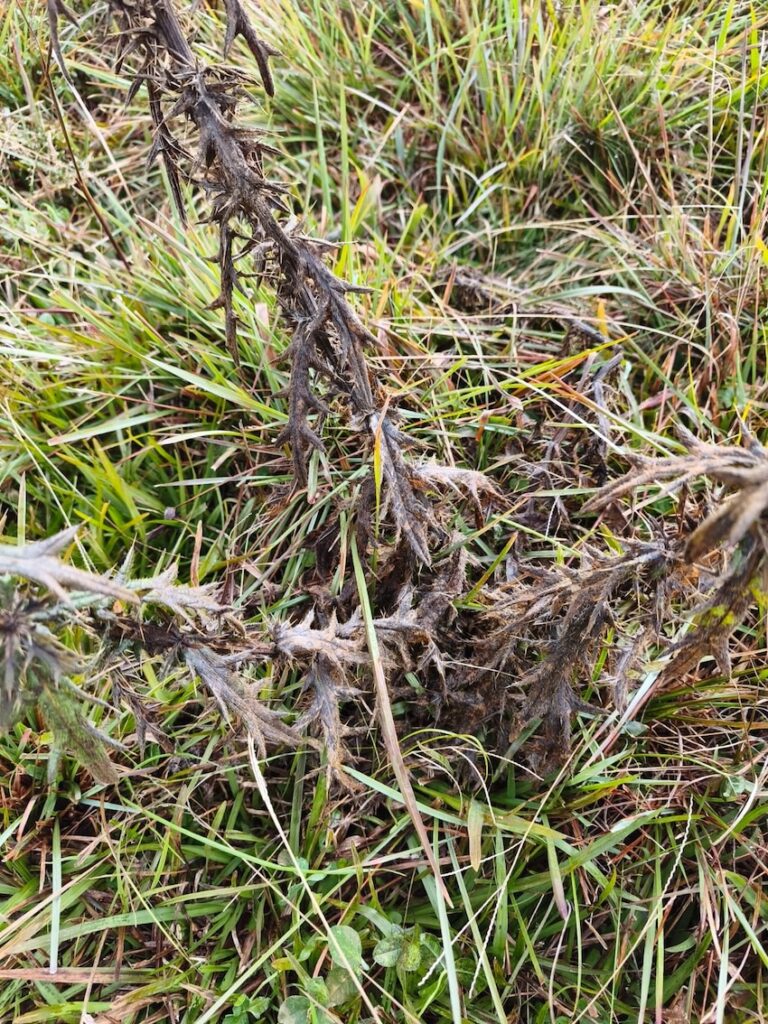
The detailed record shows a stark contrast in the gradient of effect of the hormonal herbicide when applied at the early stage of weed development. Unlike the lignified adult specimen, the young rosette suffered severe and accelerated collapse in just six days, exhibiting advanced necrosis (total darkening of the tissues) and complete dehydration of the spiny basal leaves. The use of mineral oil was crucial in overcoming the rosette’s hair barrier, resulting in the early elimination of the plant’s core and demonstrating that this is the ideal time for definitive chemical control (Photo: 06/23/2026 | Application: 06/17/2026 | Pai Bitu, São Francisco de Paula, RS).
4. Subtle Response: Carqueja (Baccharis trimera)
As expected for a perennial subshrub with a firm, waxy cuticle on the cladodes, the carqueja exhibits the most subtle gradient in the batch at 6 DAA, showing only loss of vigor and slight chlorosis at the tips of the upper shoots.
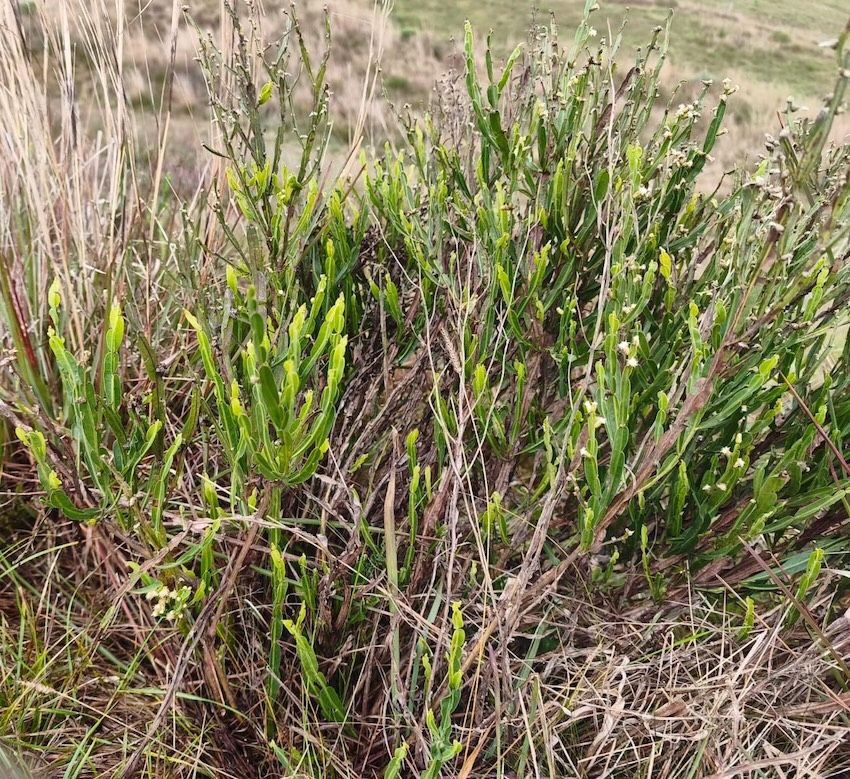
The technical record demonstrates the initial response of this perennial subshrub to treatment with hormonal herbicide and mineral oil. Due to its compact morphological structure and firm cuticle on the cladodes (flattened branches), the visual gradient in this initial phase is subtle, but already shows loss of vigor and a slight yellowing (chlorosis) at the tips of the upper shoots. The adjuvant was fundamental in breaking the waxy barrier of the branches and initiating growth arrest (Photo: 06/23/2026 | Application: 06/17/2026) | Pai Bitu, São Francisco de Paula, RS).
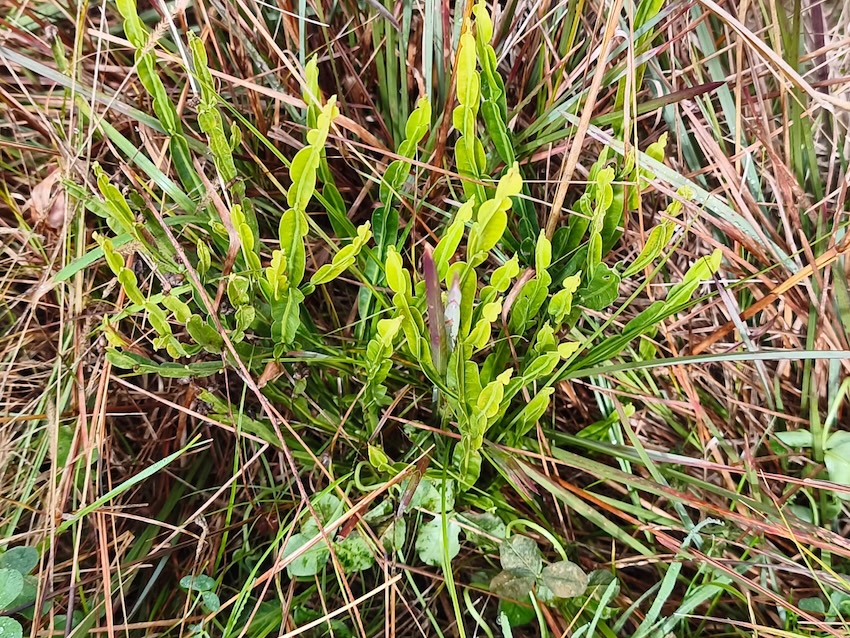
The technical record demonstrates the initial response of this perennial subshrub to treatment with the hormonal herbicide and mineral oil. Due to its compact morphological structure and firm cuticle on the cladodes (flattened branches), the visual gradient in this initial winter phase is subtle, but already shows loss of vigor and the beginning of a slight yellowing (chlorosis) at the tips of the upper shoots. The use of the adjuvant was fundamental to break the waxy barrier of the branches and initiate the cessation of growth of the clump (Photo: 06/23/2026 | Application: 06/17/2026 | Pai Bitu, São Francisco de Paula, RS).
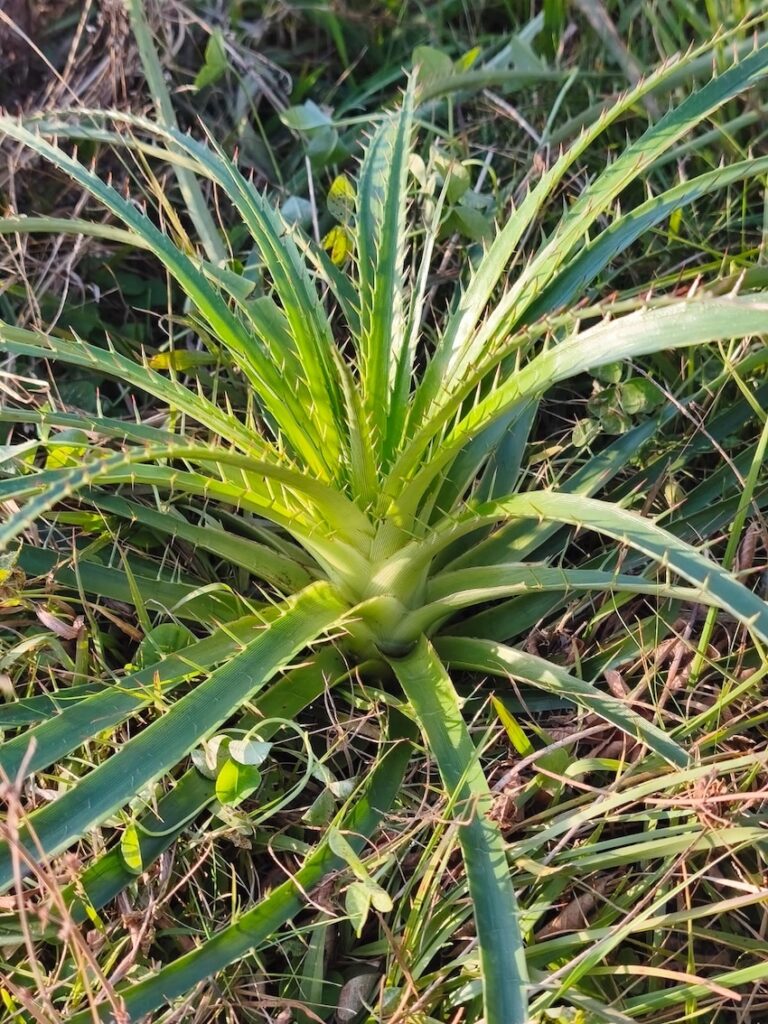
5. Caraguatá (Eryngium horridum Malme) without symptoms
Next Steps and the Transfer Strategy
This week’s records confirm that young, herbaceous plants respond quickly to treatment, while perennial or lignified species require more time to show full translocation of the active ingredient.
This publication will be updated periodically.
We will bring new photographic records in the following weeks (15 DAA, 30 DAA) to monitor whether the necrosis will reach the base of the carqueja clumps and mature thistles, supporting the producer’s decision to carry out the strategic re-planting scheduled for 60 days from now.
TREATMENT OF LARGE AREAS
The efficiency demonstrated by the system in the selective control of Annoni grass (Eragrostis plano Nees) (PEREZ et al., 2015) highlights its high potential for the management of other invasive species of importance in the natural fields of São Francisco de Paula, preserving the desirable vegetation and favoring the gradual recovery of biodiversity and the productive capacity of pastures. The Campo Limpo Chemical Roçadeira, developed with EMBRAPA technology and marketed by GRAZMEC (Não-Me-Toque, RS), constitutes a highly efficient tool for this management strategy, carrying out the selective application of the herbicide by moistening the target plants, without conventional spraying. This characteristic significantly reduces the risk of drift and product waste, directing the application exclusively to invasive plants and minimizing impacts on desirable forage species. As a consequence, it favors the recovery of vegetation cover, increases the useful productivity of the pasture and contributes to the environmental and economic valorization of the managed areas.
IF THE OWNER DOES NOT WISH TO PURCHASE THIS TYPE OF EQUIPMENT, one option is to hire specialized companies, such as ECOPAMPA (Bratta, Padilha e Perez Ltda.), based in Livramento, RS (contacts), which serves other municipalities, with its own machines, acquired from GRAZMEC, and trained and experienced personnel (Agricultural Engineers Luciano Padilha Bratta, Lorena Ratto Padilha ([email protected]) and Leonardo Perez ([email protected])) in this type of operation, being technically guided for effective control within the pillars of EMBRAPA research.
BIBLIOGRAPHY
PEREZ, Naylor Bastiani; FILIPPINI ALBA, José Maria; SHILICK, Fábio; GARAGORRY, Fabio Cervo; MARQUES, João Batista Beltrão; PEREZ, Leonardo; NUNES, Cleist Luiz Ribeiro; CICCONET, Nelson. Annoni grass control program at the Cerro Chato Wind Farm: diagnosis and proposals. Bagé: Embrapa Pecuária Sul, 2015. 31 p. (Documents, 146). Available at: Embrapa Infoteca-e. Accessed on: 26 June. 2026.